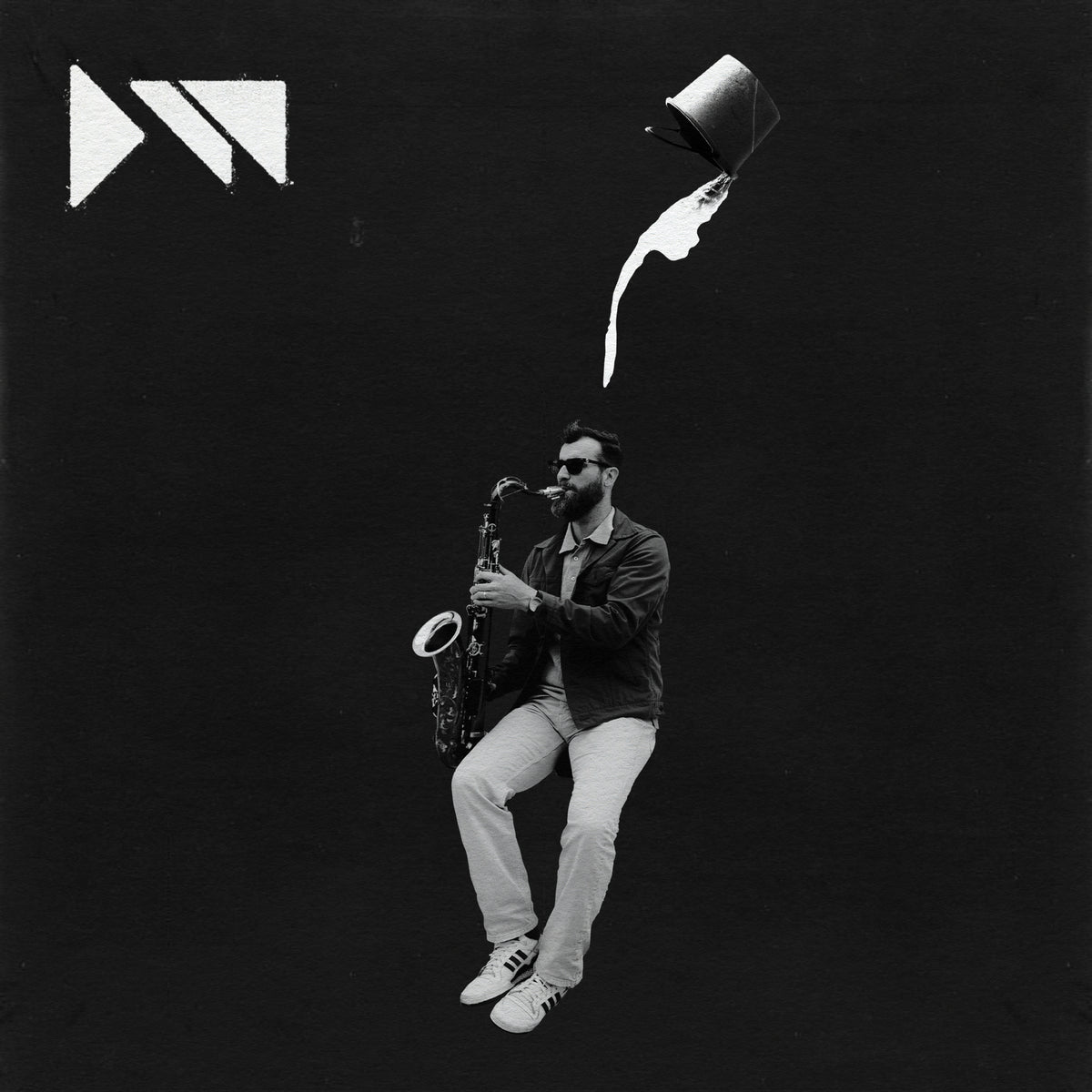

Dan White - Dee Dub (Vinyl)
Dan White - Dee Dub (Vinyl)
Couldn't load pickup availability
Liner Notes "There is power in the present moment. To be there you must be prepared (overly prepared!) and willing to let it all go and turn on a dime. I much prefer the “Do it live” approach to recording — all in one room with a great deal of improvisation; jumping off the cliff together and finding a way to land with the red recording light on.
I dedicate this album to my family. At its heart, this is music I grew up with — “Yes, You” from Medicine Music, “The Banquet” from the movie Hook, “Old Man” from Harvest, and “Road” from Pink Moon. “Don’t Get Around Much Anymore” was one of my grandfather Bill White’s favorite Duke Ellington tunes. My mom used to practice “Song of India” on our upright piano. The last sound you hear is from the instrument that unlocked the creative universe at the start of my musical journey.
These days I’ve been trying to listen more and say less. This is a trio album which means there is a lot of minimalism to it. Certified human with no AI enhancements; this is music of the earth with mistakes and groove. We left some space for you the listener and invite you to imagine your way through the world we built and the fun we had making it. —Dan White, July 2026"
Featuring Dan White (tenor, baritone, and soprano saxophones), Charlie Hunter (hybrid guitar), Scott Amendola (drums), and special guests Victoria Victoria (Vocals), Otis McDonald (percussion/ mixing/ mastering), and Chris Ott (conch shells)
Embracing and extending the art of narrative flow, multihyphenate saxophonist Dan White teams up with guitarist Charlie Hunter and drummer Scott Amendola for Dee Dub—a collection of originals and uniquely personal interpretations more uncovered than covered. Written, arranged and produced by the rapturous reedist, it’s a powerful biographical statement that distills and redirects the unique energy White is known to bring to his many prominent collaborations (Huntertones, Cory Wong, Lake Street Dive, etc.). Reflective of life’s bounties and bending roads, the ace trio at the heart of this project formed as an outgrowth of White’s work with Kurt Elling’s funk-and-soul leaning Super Blue, with Hunter. “I was touring and becoming closer with Charlie over the summer of 2025. And I had moved to the West Coast, where he was originally based, so he introduced me to Scott, who’s nearby,” White explains. “We played some gigs around town and became fast friends; and there was clearly a direct connection where we didn't have to explain anything, which is very special.”
With these three artistically-aligned personalities coalescing, and White’s growing desire to document connections from past to present, they converged on Earthtones Recording Studio in Greensboro, North Carolina, and laid down the music for Dee Dub. Captured live in one room, with the entire project documented on video due for parallel release, White used the opportunity to flesh out his story while emphasizing the importance of genuine connection.
Conceptually binding the topics of self-exploration and lodestar influences—the sonic compass provided by Joshua Redman’s Elastic Band, joy inherent in Eddie Harris’ work, sophisticated wit surrounding Sonny Rollins’ trio triumphs—White and company captivate throughout. And with the addition of several key guests—Elling-made connections in vocalist Victoria Victoria (vocals) and Otis McDonald (percussion/mixing), plus Huntertones bandmate Chris Ott (conch shells)—the picture becomes even more detailed and nuanced.
Opening on the soulful slink of Bobby McFerrin’s “Yes, You,” White, Hunter and Amendola quickly demonstrate a mastery in tempo reserve. “It’s planting a flag of pocket” the leader explains. A wide-field starter colored by Ott’s tasteful conch shell enhancements, it establishes the intentions and dimensions for this outing while highlighting the composer’s importance in White’s world. “Bobby McFerrin is one of my heroes,” he enthuses. “Medicine Man, the album that this song appeared on, was in heavy rotation when I was growing up. Bobby performs afternoon a cappella shows at Freight and Salvage in Berkeley, each show truly refills my cup.”
Welcoming Victoria and McDonald into the mix, the band moves from quiet beginnings to a Mozambique-moored domain on a reimagining of Nick Drake’s “Road.” “I discovered Pink Moon right around the time I went to college,” White recalls, citing epic car trips colored by Drake’s riveting music. Victoria’s subsequent appearance, on “Cry on My Shoulder” by Bonnie Raitt, proves remarkably catchy and complementary. “The original version from the late ‘80s had a lot of splashy synths,” White notes, “and this take is a lot more sparse and dry, just really embracing the intimacy.”
Between vocal entries, the trio delivers notable looks at both silver screen and café draw. “The Banquet,” from John Williams’ score for Hook, offers bari-bolstered allure, folding several themes into a cohesive statement. “That underscores a wonderful scene about the power of imagination; it’s a big moment still that gives me goosebumps,” he admits. “Mameya,” the first of five originals on the album, takes its name from a coffee shop in Tokyo where White found comfort to ward off jetlag. Distant and mysterious, it's a slow burn that blossoms.
With “Old Man” and “Stone City” at album’s midpoint, White works his magic on a Neil Young classic and then lets loose in open territory of his own making. The former, which cleverly interpolates the riff from Labi Siffre “I Got The…” (lifted for Eminem’s megahit “My Name Is”) benefits from durable design and aural alchemy; and the latter a blowing tune with a touch of “Spanish Joint,” courtesy of the Hunter/D’Angelo connection. White’s “Fly,” following on the heels of those centerpieces, plays up the balance between dissonance and beauty. “It drives, but then it also eases up off the gas,” he shares. “That’s an exploration or encapsulation of all the traveling I’ve been doing recently. You can see a lot of turbulence in between two jet engines and a lot of peace at 30,000 feet.” Moving into the last third of the album, family is front and center. A swaying look at Duke Ellington’s immortal “Don’t Get Around Much Anymore” comes first, cutting across and connecting generations. “That’s dedicated to my late grandfather,” White explains. “It was one of his favorite tunes. He gave me his saxophone, made in 1927, the year he was born. And during the pandemic, I would call him every week. We would talk, and on the days where it was a struggle to find words or his memory would be lapsing, I would just play for him on that horn.”
Emphasizing the maxim that there’s no place like home, White’s “Valley Bee” draws name and energy from the street where he was raised. A weighted wonder spotlighting the leader’s personable and powerful bari sound, it’s both callback and look forward. Then, making a rare appearance on soprano for the album’s closer, White melds tenderness and soulfulness in his adaptation of Nikolai Rimsky-Korsakov’s “Song of India” “I remember going to bed as a kid and hearing my mom practice this very beautiful melody on our upright,” he reveals. “So, I wanted to give a little shout out to that memory and show some gratitude for that piano, which was the vehicle for my composing and my start in music. The last sounds on the song and the record are playing on that upright.” Using a seminal moment and melody as his exit, White ties a ribbon around the brilliant and revelatory Dee Dub.
Share